


Crown Thinning Oak Trees in Springfield: Why Timing Beats Technique
September 23, 2026
Quick Answer: Crown thinning removes selected live branches throughout a canopy to reduce density, which improves airflow, sunlight penetration, and wind resistance without changing a tree's overall size. For oaks around Springfield and the wider Ozarks, timing carries extra weight because of oak wilt, a fungal disease spread by sap-feeding beetles that are drawn to fresh pruning wounds. The Missouri Department of Conservation advises against pruning oaks from mid-March through June, when beetle activity and fungal spore production both peak. Dormant winter months, generally November through January, remain the safer window for thinning an oak crown in this region. Trees outside the oak family are not bound by the same restriction, though other seasonal factors still apply to them.
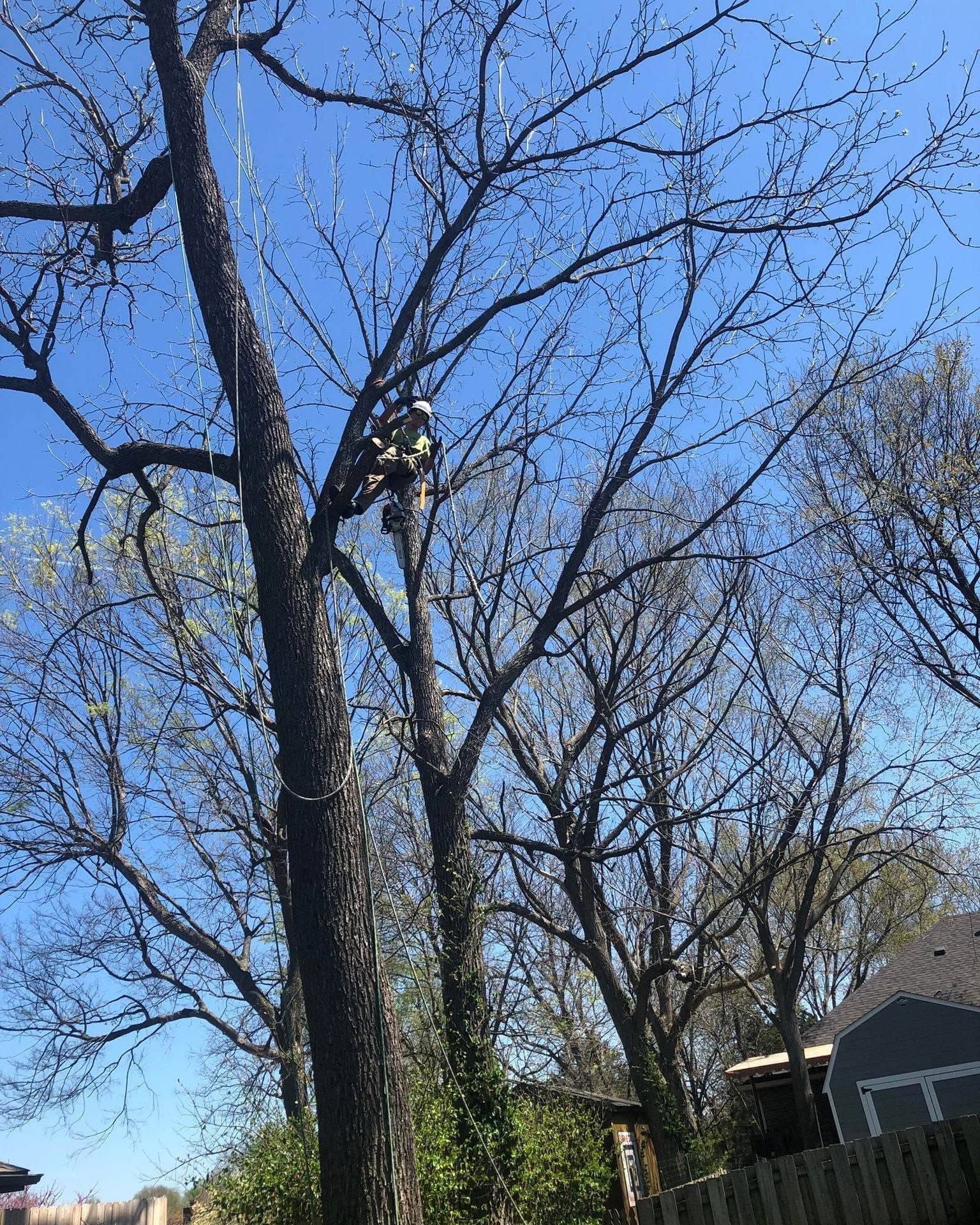
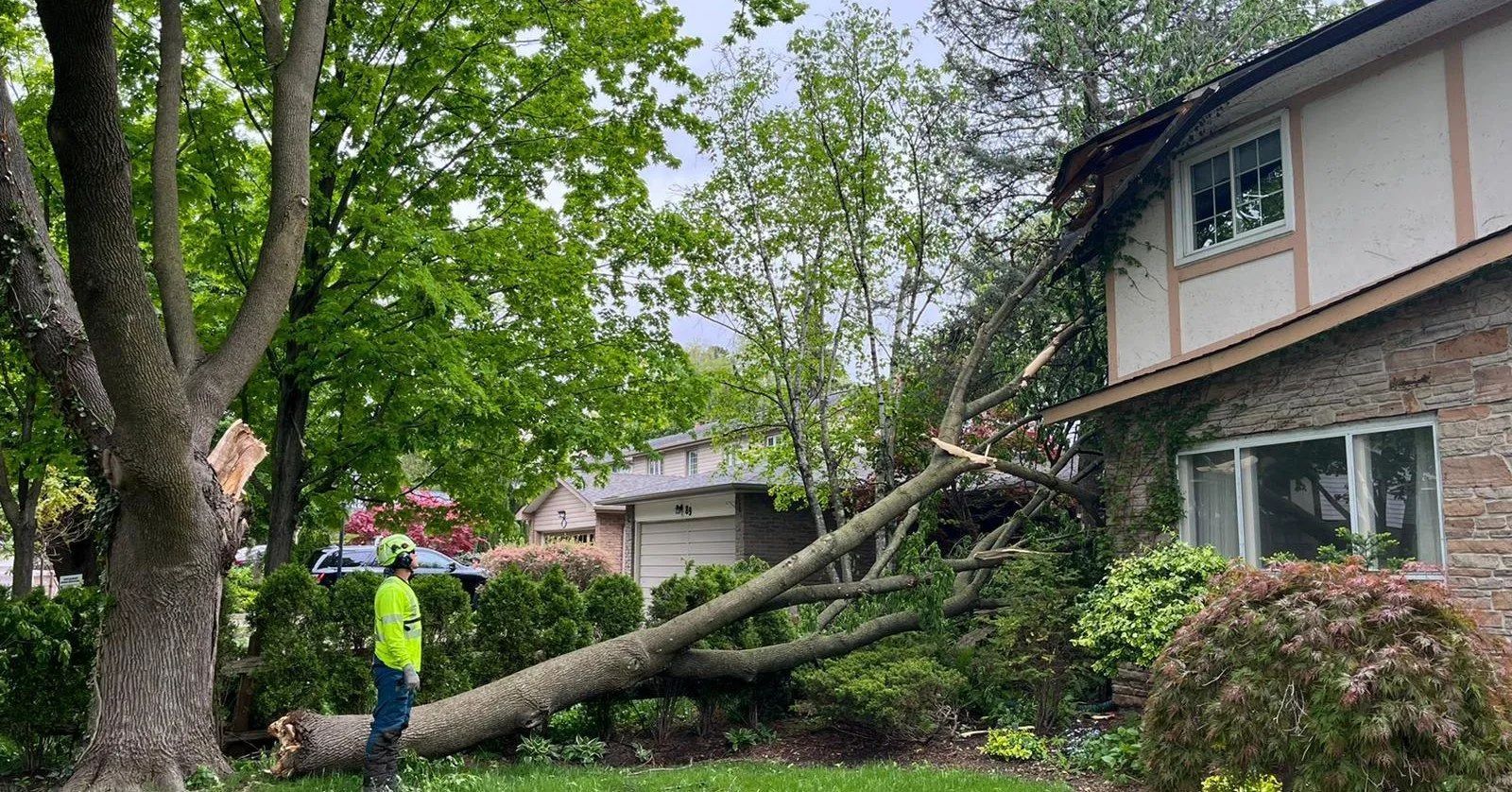
A mature red oak along a front yard in Republic can look crowded by late winter, its canopy thick enough to shade out the grass underneath and catch more wind than it needs to during a spring storm. The instinct to thin that canopy on the first warm weekend in March is a reasonable one. It is also, for oaks specifically, one of the more common ways an otherwise healthy tree ends up with a disease that has no cure.
Crown thinning is one of the more requested pruning methods across Springfield and the surrounding Ozarks, and for most species it can be scheduled around a homeowner's calendar without much concern. Oaks are the exception. The technique itself does not change. What changes is when it can safely happen.
What Crown Thinning Actually Removes From the Canopy
Crown thinning targets overcrowded interior growth rather than the tree's overall shape or height. A trained crew works through the canopy selectively, removing enough live branches to open the structure up without stripping the foliage the tree needs to keep producing energy.
Interior Airflow
Dense canopies trap humid air around leaves and bark, which is exactly the condition fungal and bacterial problems favor. Thinning lets that air move.
Sunlight Distribution
Light reaching the lower and interior branches, not just the outer canopy, keeps growth balanced across the whole tree instead of concentrated at the tips.
Wind Resistance
A thick canopy acts like a sail during a storm. Removing excess density lowers the load on the trunk and main scaffold limbs when Ozarks wind picks up.
Disease Buildup
Dead pockets of crowded, poorly ventilated growth are where decay and pest problems tend to start. Thinning removes that habitat before it becomes a bigger problem.
This is different from crown reduction, which lowers a tree's overall height or spread, and different from crown raising, which clears space underneath the canopy for walkways or vehicles. Thinning changes density. It does not change the tree's footprint.
The Regional Risk That Doesn't Show Up in a National Pruning Guide
Most pruning advice available online treats timing as a matter of dormancy: cut when the tree is not actively growing, and you'll generally be fine. For oaks in Missouri, that advice is incomplete.
Oak wilt is a lethal disease caused by the fungus Bretziella fagacearum, and it is especially destructive to species in the red oak group. According to the Missouri Department of Conservation, the fungus spreads primarily when sap-feeding beetles carry spores to fresh wounds early in the growing season, and once a tree is infected, the disease can move underground through connected root systems to reach neighboring oaks that were never pruned at all.
The two oak groups do not respond the same way. In red oaks, the first sign is usually browning and wilting starting in the upper crown in early summer, and defoliation can happen within two to six weeks of infection, with the tree dying inside a year. White oaks tend to hold on longer. Some survive for years afterward, particularly with careful removal of infected branches, though they are not immune to the disease.
Why the Danger Window Lines Up With Prime Pruning Season
The reason oak wilt timing matters so much comes down to what happens under the bark of a tree that already died from the disease. Fungal mats form there the following spring, crack the bark as they grow, and give off a sweet, fermenting smell that draws sap-feeding beetles in. Those same beetles then move on to the nearest fresh wound they can find, whether that wound came from storm damage, construction, or a pruning cut made that same week.
The Missouri Department of Conservation's guidance is direct on this point: don't prune oaks from mid-March through June. Other regional forestry programs, including one serving Northwest Arkansas, extend the caution further and treat the entire stretch from February through June as unsafe, since beetle activity can start earlier during a mild winter. Either way, the unsafe window falls squarely across the months when most homeowners are outside doing yard work and most inclined to book a
pruning appointment.
Safe Windows for Thinning Oak Crowns in the Ozarks
Dormant winter months, roughly November through January, are the most reliable window for crown thinning on oaks in this region. Beetles are far less active in cold weather, and the tree itself is carrying fewer resources that a fresh wound could put at risk. Regional arborist guidance for the Ozarks and Northwest Arkansas area points to this same stretch, recommending that oak pruning be planned ahead for the months when trees are growing very little and sap beetles are dormant.
Waiting until after the beetle population drops off in mid to late summer is sometimes treated as a secondary option, but for most properties around Springfield, Nixa, Ozark, and Willard, the dormant season remains the more dependable choice for scheduling oak-specific pruning work.
Tip: Pruning paint or wound sealant applied immediately after any oak cut, even during a lower-risk month, adds another layer of protection against wound-seeking beetles. Low risk is not the same as no risk.
Sealing the Cut: Where Wound Care Fits Into an Oak Pruning Plan
Because sap beetles can locate a fresh wound within hours, sealing an oak cut right after it's made closes off the window of exposure that beetles rely on. This matters most during the higher-risk months, but arborists who work regularly in oak wilt territory tend to apply the same precaution year-round rather than treating it as optional only in spring.
WARNING: If an oak on the property is already showing sudden browning or wilting that starts at the leaf margins and moves inward, especially in the upper crown during early summer, have it evaluated before any further pruning happens nearby. Several other tree problems can look similar, and an accurate read on what's actually affecting the tree changes what should happen next.
How This Changes for Other Species on Ozarks Properties
Oaks carry a restriction that most other trees common to Springfield yards simply don't share. Maples can bleed sap heavily if cut in late winter, which looks concerning but is cosmetic rather than harmful. Hackberries, sweetgums, and most other hardwoods across the region follow the more familiar rule of pruning during dormancy for structural work, with flexibility for minor cleanup at other points in the year.
A property with a mix of species needs a pruning schedule that treats the oaks differently from everything else growing around them, rather than one blanket timeline applied to the whole yard.
Frequently Asked Questions
Can oak trees be crown thinned at any time of year in Missouri?
Not safely. The Missouri Department of Conservation advises against oak pruning from mid-March through June, when beetles spreading oak wilt are most active. Dormant winter months remain the more reliable window for oak-specific pruning in this region.
What is oak wilt, and why is it so serious for red oaks?
Oak wilt comes from the fungus Bretziella fagacearum, which blocks a tree's internal water movement. Red oaks are especially vulnerable, showing upper-crown wilting by early summer, with defoliation possible within two to six weeks, then death within a year.
Are white oaks affected by oak wilt too?
Yes, though decline happens more slowly. Some white oaks survive for several years after infection, especially when infected branches are carefully removed, but the species remains susceptible overall and should never be considered immune to the disease.
How can I tell if my oak already has oak wilt?
Watch for leaves shifting from olive drab to light tan or bronze starting at the edges, paired with upper-crown wilting in early summer for red oaks, or scattered branch wilting for white oaks. A direct evaluation confirms it.
Does crown thinning differ from crown reduction when preparing for storm season?
Yes. Crown thinning reduces canopy density without changing the tree's overall size, lowering wind resistance while keeping its natural shape. Crown reduction instead changes height or spread. Both support storm preparation, but each solves a different structural problem.
Does this oak wilt timing apply across the whole Springfield area?
It applies broadly across Missouri and the surrounding Ozarks, including Nixa, Ozark, Republic, Willard, Bolivar, and Buffalo. Oak populations and climate patterns stay similar enough across these communities that one shared pruning calendar holds true region-wide.
Good Timing Protects What Good Cuts Can't
Crown thinning solves a real problem for oaks growing across the Ozarks, but the fix only works when the calendar backs it up. A canopy thinned in April can end up worse off than one left crowded through spring, simply because the wound opened at the wrong moment. Species alone never decide how a cut turns out. The month it happens carries just as much weight, sometimes more, than the technique used to make it.
Oasis Tree Care, LLC
has spent 20
years watching how oaks respond to pruning across Springfield, MI, and the pattern holds every season. Trees cut in the dormant months heal cleanly and stay clear of the disease pressure that spring cuts invite. That difference rarely comes down to skill with a saw. It comes down to reading the calendar before reaching for one, which is often the harder habit for any crew to build.