

How Regular Tree Trimming Boosts Health and Curb Appeal?
June 27, 2026
You walk out to grab the mail and glance up at the big oak by the driveway. A few limbs hang low over the roofline. One looks gray and brittle, no leaves on it even in June. That nagging sense the tree needs attention is usually right.
Here is the short version. Regular trimming is the one habit that keeps a tree both healthy and good to look at, and the two go together more than most realize. A tree pruned on schedule grows stronger wood, fights off disease, and holds its shape through wind and ice. Let one go too long and you get the opposite: weak joints, dead limbs, and a shaggy outline that drags down the house. After years of climbing and inspecting trees here, the pattern is clear. The trees that look best are the ones touched regularly, and the ones that fail in a storm are the ones nobody pruned.
What Trimming Actually Does Inside the Tree
Pruning changes how a tree spends its energy. Pull the dead, weak, and crossing limbs and it stops feeding branches that were never going to pay off, then pushes that energy into strong, well placed growth. The right cuts also open the canopy so light and air move through, drying leaves faster after rain. That matters in a humid climate where fungus spreads on wet foliage.
Take off more than about a quarter of a tree's living canopy in one year and you flip the benefit, leaving it stressed and starved of leaves. On most healthy shade trees, a light pass every 3 to 5 years holds the shape without a hard cutback.
The Curb Appeal Side of the Same Job
A well shaped tree does more for the front of a house than fresh paint or new mulch. The same cuts that keep it healthy make it look intentional instead of overgrown. Raising the lower canopy opens the view and lets light reach the lawn, while thinning the crown gives a clean, layered shape instead of a solid green blob. Clearing deadwood strips out the gray, bare branches that read as neglect from the street. A lopsided canopy makes even a nice home look tired.
When to Trim, and What to Do Right Now
Timing changes the result more than most homeowners expect. For most shade trees, the best window is late winter while the tree is dormant. Cuts seal fast once spring growth kicks in, and with no leaves you can read the whole branch structure. Oaks are the exception. We avoid pruning oaks from spring through midsummer, because fresh cuts in warm weather draw the beetles that spread oak wilt, which can kill a tree in one season.
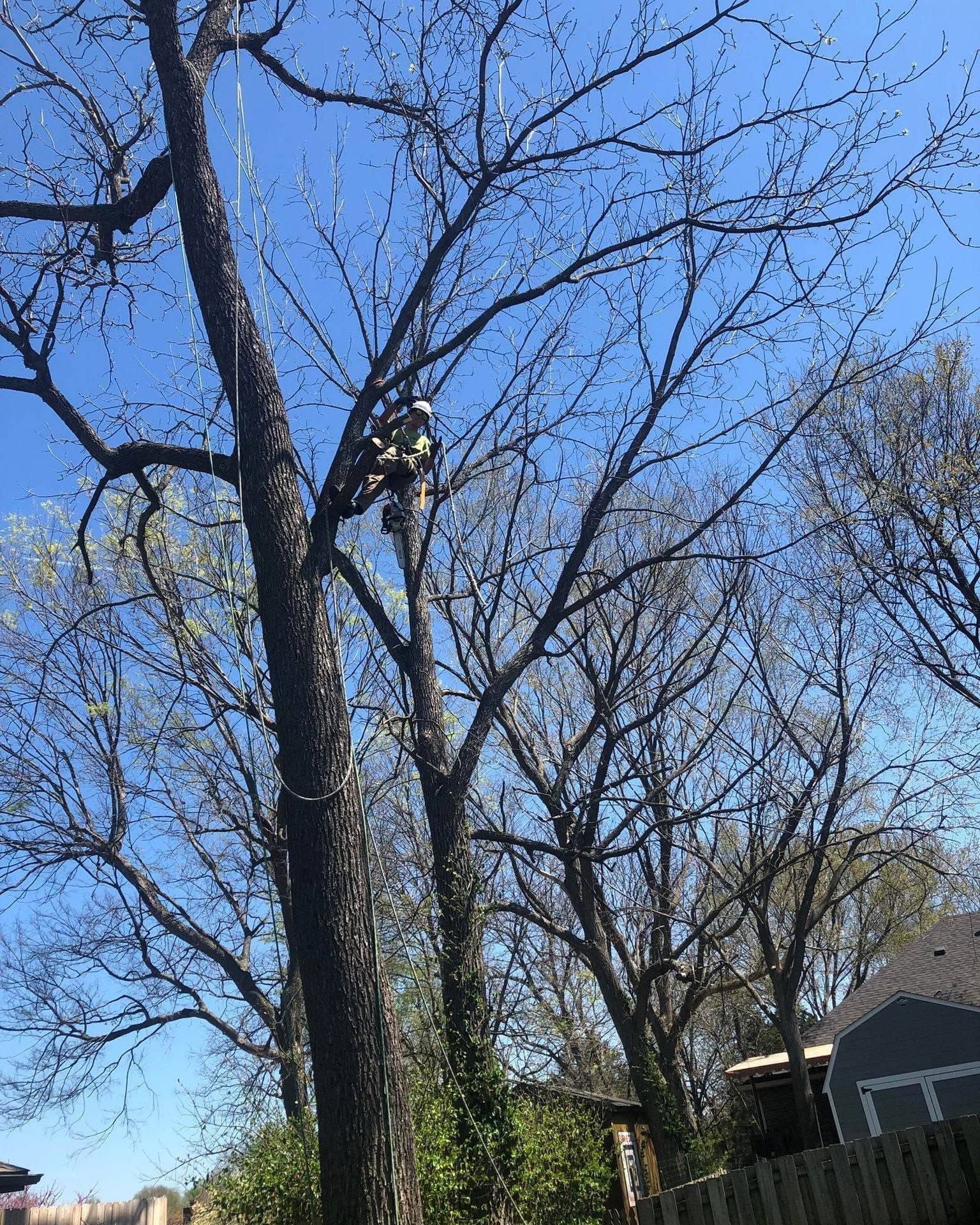
Without a saw, walk the tree and look for limbs with no leaves, branches that rub or cross, and wood over the roof, driveway, or a power line. Anything thicker than your wrist or above head height is where doing it yourself gets risky.
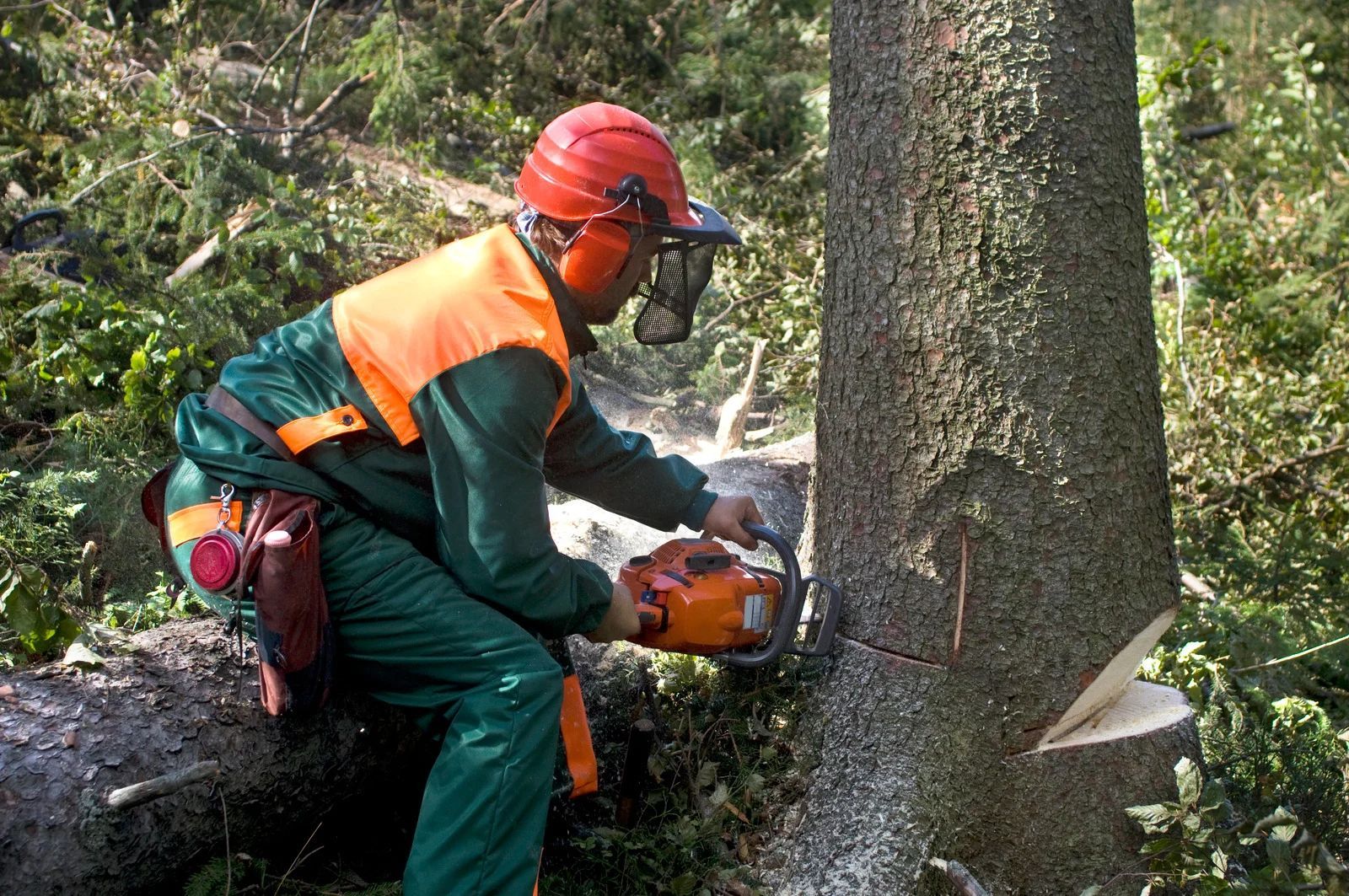
WARNING: Never set a ladder against a tree and run a chainsaw, and never prune a limb near a power line. Most serious tree injuries start this way, when a saw kicks back or a limb swings into the line and a Saturday chore turns into an emergency. Anything overhead, near wires, or out of reach with both feet on the ground belongs to a pro with the right gear.
TIP: Before you cut, tie bright tape on every limb you think should go, then look from the street. Half the time you spot one or two you would have over cut, and you trim with a plan instead of guessing.
How We Read a Tree Before Cutting
Before a single cut, we read the whole tree from the ground up, starting with the joints where two limbs meet. Tight V shaped unions with bark pinched inside them are weak and split first in wind or ice, while wide U shaped unions hold. On service calls we constantly find two stems that grew up side by side fighting for the lead, and that weak union is the break waiting to happen.
Then we look at the collar, the swollen ring where a branch joins the trunk. Every proper cut sits just outside it, never flush and never a long stub. Flush cuts invite rot, and stubs die back and decay. Species matters too, since a fast growing soft wooded tree gets handled differently from a slow, dense hardwood.
Local Conditions That Change the Job
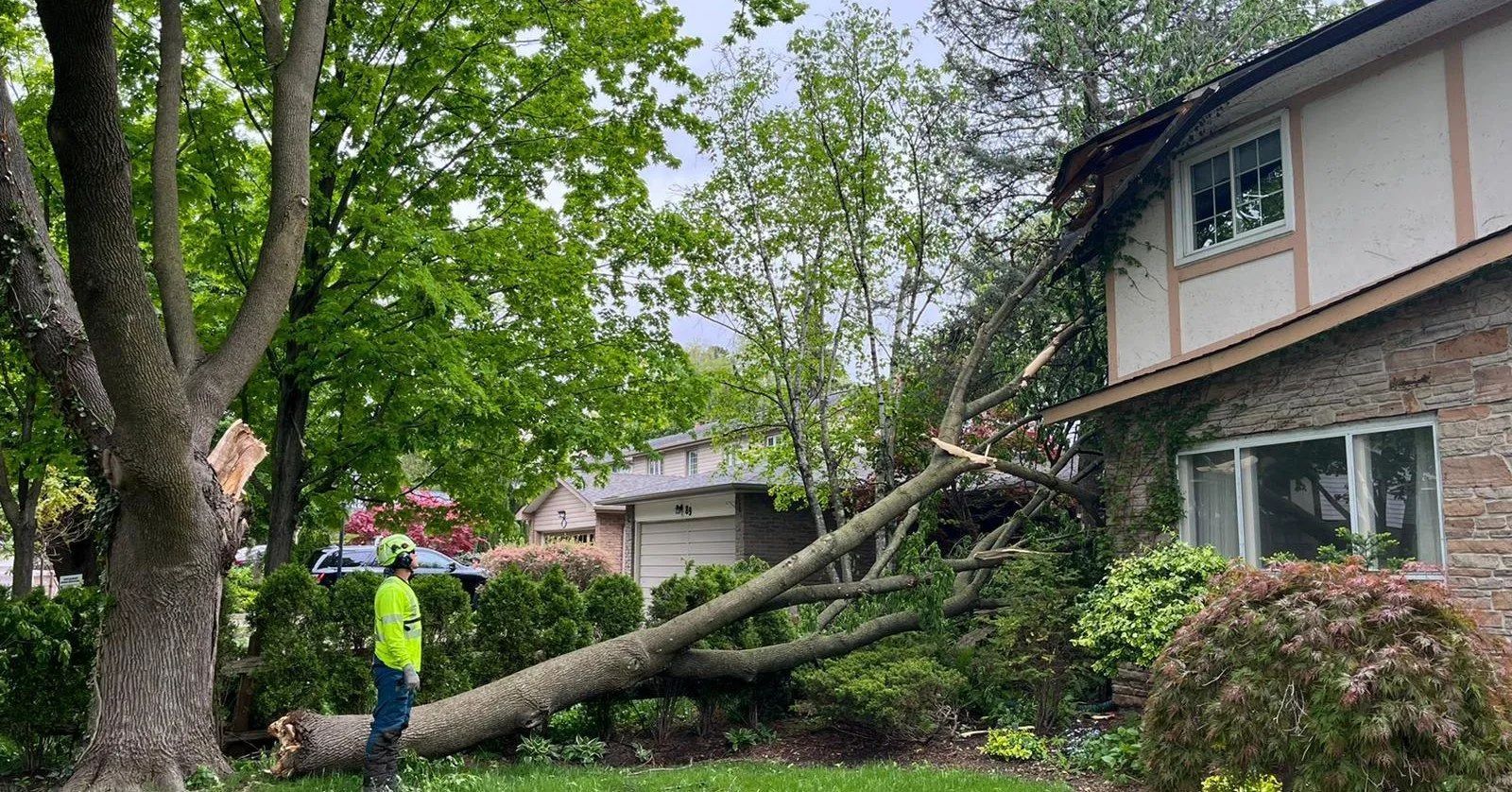
Ice drives most of what we do in this region. It can add hundreds of pounds to a single limb, and the branches that come down are almost always the dead ones, the over extended ones, and the weak joints nobody addressed. A tree thinned the winter before sheds ice far better than a crowded one carrying years of deadwood, which is storm insurance you can see.
Summers add a second problem. Hot, sticky stretches keep leaves damp and feed fungal disease, so the airflow from a thinned canopy earns its keep in July and August. Ornamental pears are the worst offenders, splitting apart in ice and wind. Fast growing soft maples pile on weight fast and need a lighter, more frequent touch.
Mistakes That Quietly Wreck a Tree
The most damaging mistake is topping, cutting the whole top back to stubs to make a tree shorter. It feels logical. It is the worst thing you can do. The tree answers the shock with dozens of fast, weak shoots that barely hold on, so within a few years you have a taller, more dangerous tree plus open wounds that let decay walk in. People top trees because one feels too close to the house. The right fix is a crown reduction, shortening limbs back to healthy side branches while keeping the structure sound.
Two smaller mistakes show up constantly. Cutting flush to the trunk because it looks neater strips off the collar the tree needs to seal a wound. And painting cuts traps moisture against fresh wood and slows healing. Clean cuts left open are what a tree actually wants.
Keeping It on a Schedule
Trees reward a routine over a rescue. A slow walk around each one every season catches the early signs before they grow into real problems. Once a year, in late fall or winter, look harder at structure and deadwood while the leaves are down. The one item worth circling on the calendar is a structural check before winter, because going into ice season with deadwood cleared and weak limbs handled is the difference between a tree that bends and one that breaks across your driveway at two in the morning.
Frequently Asked Questions
How often should I trim my trees?
Most healthy shade trees do well with a light pruning every 3 to 5 years, plus a quick yearly check for deadwood. Fast growing species need it more often. Avoid heavy cutting on oaks in spring and summer to protect them from oak wilt.
Is it bad to trim trees in summer?
Light cleanup is fine, but heavy summer pruning stresses a tree when it needs its leaves most. Oaks are the real concern, since warm weather cuts attract beetles that spread oak wilt. For big structural work, late winter is almost always the better window.
Will trimming a tree make it grow back fuller?
Done right, yes. Removing weak and crossing limbs pushes energy into strong, well placed growth, so the tree fills in healthier over time. Done wrong, like topping, it triggers a burst of weak shoots that look full at first but fail later.
Can I trim large branches myself?
Small limbs you can reach from the ground are fair game. Anything overhead, thicker than your wrist, or near a power line is not. Those jobs need rigging, training, and the right saw. A bad cut or a swinging limb causes most tree injuries.
Does trimming really help in ice storms?
It is one of the best things you can do. Ice piles weight onto branches fast, and the limbs that snap are usually dead, over extended, or weakly joined. A tree thinned and cleared before winter carries the load far better and rarely fails.
Experienced Arborists Keeping Springfield Trees Strong and Sharp
A tree trimmed on a regular, light schedule stays healthier, stronger, and better looking than one left to fend for itself, and the same cuts deliver both. That matters more here than most places, because our ice storms and humid summers punish exactly the trees that go unpruned, turning small problems into split trunks and downed limbs overnight. If your trees are overdue for a look, that is what we do every day. Oasis Tree Care, LLC
has spent 20
years pruning, thinning, and shaping trees for homeowners across Springfield, Missouri, and nearby communities. Reach out for a straight read on what your trees need and when, whether that is a quick seasonal cleanup or something worth handling before the next storm.