

Dead Tree Standing in Your Yard? Why Waiting to Remove It Gets Riskier
August 25, 2026
Quick Answer: A dead tree does not stay in the same condition it was in the day it died — the wood keeps drying, cracking, and losing the strength that held branches and trunk together. Roots that once anchored the tree start to decay underground, and every wind event, ice storm, or heavy rain moves it closer to failure. There is no safe waiting period. If a tree shows no leaves in the growing season, brittle limbs, peeling bark with no green cambium underneath, or fungus at the base, it needs a professional evaluation now, not next season. The longer a dead tree stands, the more unpredictable its failure point becomes, and the more it threatens the roof, vehicles, fence line, or power connection nearest to it.
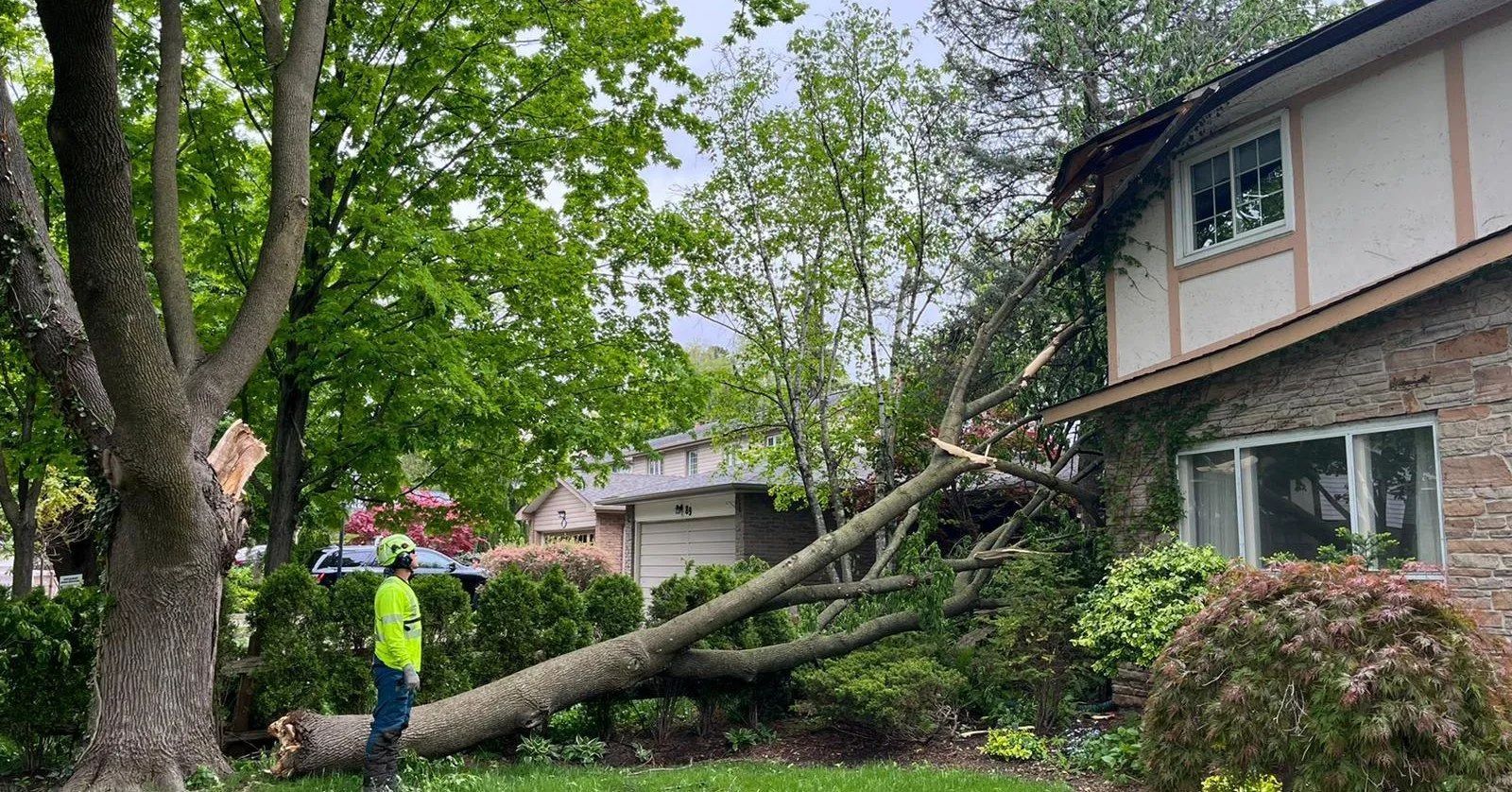
You look out at the same tree every morning — the one that leafed out fine last spring but this year stayed bare while everything around it turned green. Maybe you've told yourself it will come back, or that removal can wait until it fits the budget better. In the Ozarks, that wait usually runs headlong into a spring thunderstorm line or a January ice event, and the tree that looked stable in July is the one coming down through a bedroom ceiling in February.
A dead tree isn't a fixed hazard sitting quietly in your yard. It's an active one, and it's getting worse by the week. Here's what's actually happening inside that tree while it stands, and why the calendar matters more than most homeowners think.
How a Dead Tree Changes Once It Stops Growing
Wood loses its moisture and flexibility first. A living tree bends in wind because its wood is pliable and full of moisture. Once a tree dies, that moisture dries out of the fibers and the wood turns stiff and brittle. Instead of flexing, dead limbs and trunks snap.
Decay works from the inside out, and you usually can't see it happening. Fungi and bacteria move into dead wood almost right away, breaking down the fibers that give the tree its strength. The outer wood can look fine while the interior turns soft, hollow, or crumbly underneath. Extension foresters generally flag a trunk for removal once a third or more of its cross-section is hollow or rotted.
Roots decay too, and this is the part homeowners overlook most. The root system that anchors a tree against wind loses its grip the same way the trunk loses strength above ground. A dead tree with compromised roots doesn't even need a broken limb to fail — the whole tree can uproot and go over in saturated soil, which happens more than you'd think across the Springfield area after a few days of spring rain.
Bark separation speeds everything up. As the cambium layer beneath the bark dies, bark loosens and sloughs off in sheets. Once the bark is gone, the exposed wood dries and cracks faster, and insects and moisture get a straight shot at the trunk.
Warning Signs to Look For
No leaves during the growing season is the clearest tell there is. If neighboring trees of the same species have full canopies by late spring and yours is still bare, something has gone wrong at the root or trunk level.
Check the bark next. Scratch a small patch on a live-looking branch. Green tissue underneath means the branch is alive. Brown, dry wood means it isn't, and that's worth doing on two or three branches before you draw a conclusion.
Cracks, seams, or cavities in the trunk are structural red flags, especially on the side of the tree facing your house or driveway. So is fungal growth at the base — mushrooms, conks, or shelf fungus growing from roots or bark signal that the internal decay is already well established. By the time you can see fungus on the outside, the rot inside usually has a head start.
A sudden or increasing lean, especially after a storm, often means the roots or trunk have already started to fail. Falling bark, limbs dropping with no wind, or branches that snap easily instead of bending are signs the tree has crossed from declining into failing.
If two or more of these signs show up on the same tree, don't wait to see what next season brings. Get it looked at.
WARNING: A dead tree standing near a house, driveway, deck, or power line is a structural failure risk, not just a landscaping issue. Trunk and root decay don't fail on a predictable schedule — a tree that looked stable in August can come down in a February ice storm with almost no warning. If a dead or clearly declining tree sits within falling distance of a structure, vehicle, or walkway, treat the evaluation as time-sensitive rather than something to schedule around convenience.
Why Waiting Makes the Problem Worse, Not Better
Some homeowners assume a dead tree hits a plateau and just sits there until they get around to dealing with it. It doesn't work that way. Decay is a continuous process. A tree that's been dead six months is measurably weaker than it was at three months, and the gap between "looks fine" and "structurally unsound" narrows every season.
Storm season raises the stakes here more than in most places. Missouri's severe weather pattern — spring thunderstorms with straight-line winds, occasional tornadic activity, ice accumulation in winter — puts direct load on wood and roots that are already compromised. A live tree can flex through a wind event that would snap a dead one clean at the trunk.
Removal also gets harder and more technical the longer a tree stands. A dead tree that's been up for a while often has unpredictable failure points, and that changes how a crew has to approach the job. Rigging, roping, and controlled sectional removal all depend on knowing which parts of the tree can still bear weight during the cut, and on a badly decayed tree that's a moving target. The safer window for removal is earlier, while more of the wood is still predictable.
Pests move in fast. Dead wood attracts boring insects, carpenter ants, and termites, and they don't stay put — they can migrate from a dead tree to nearby healthy trees, fences, or the house itself if the tree is close enough.
And insurance coverage isn't guaranteed after the fact. If a tree was visibly dead, decaying, or a known hazard before it fell, some homeowners' policies treat that as a maintenance failure rather than an unpredictable event, which can affect how a claim gets handled. Confirming your specific coverage with your insurer is worth doing before a dead tree comes down, not after.
How a Professional Evaluates a Dead Tree
An arborist starts with likelihood of failure — the type and location of decay, crack patterns, root condition, and lean all factor into how likely the tree, or a specific part of it, is to fail and how soon.
Then comes what's actually in the fall zone. The house, garage, fence, power line, parked vehicles, and any path people walk regularly all matter here. A dead tree in an open field carries far less urgency than the same tree fifteen feet from a bedroom window.
Combine those two factors and you get the consequences if it fails, which is what determines the overall risk level and how fast removal needs to happen. This is the same framework — likelihood, target, consequence — that the International Society of Arboriculture uses to standardize tree risk assessments nationally. It's why a proper evaluation looks at more than just whether the tree is dead.
What Removal Actually Involves
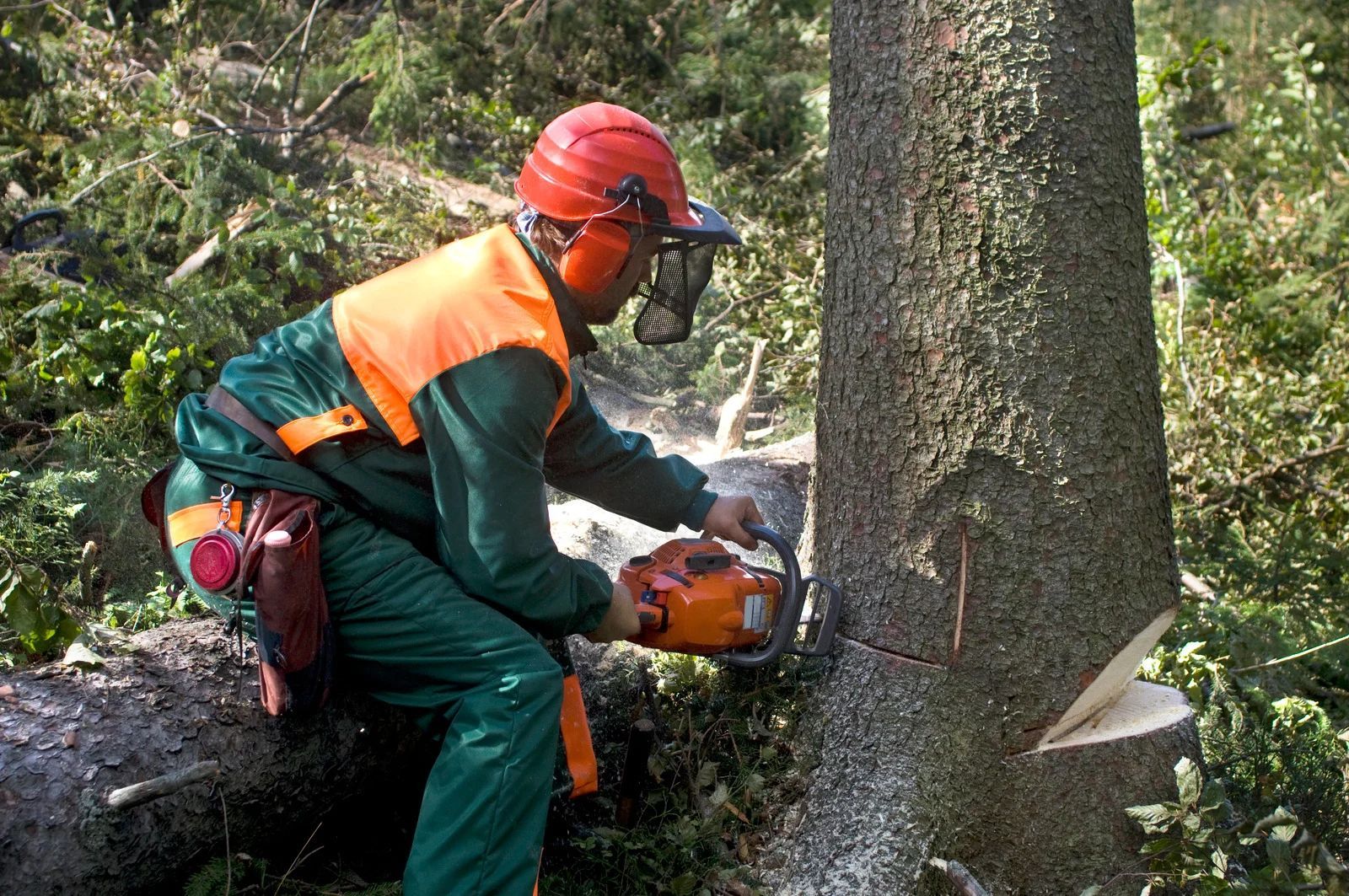
Removing a dead tree is different work than removing a healthy one. It isn't a job for a homeowner with a chainsaw and a rented lift.
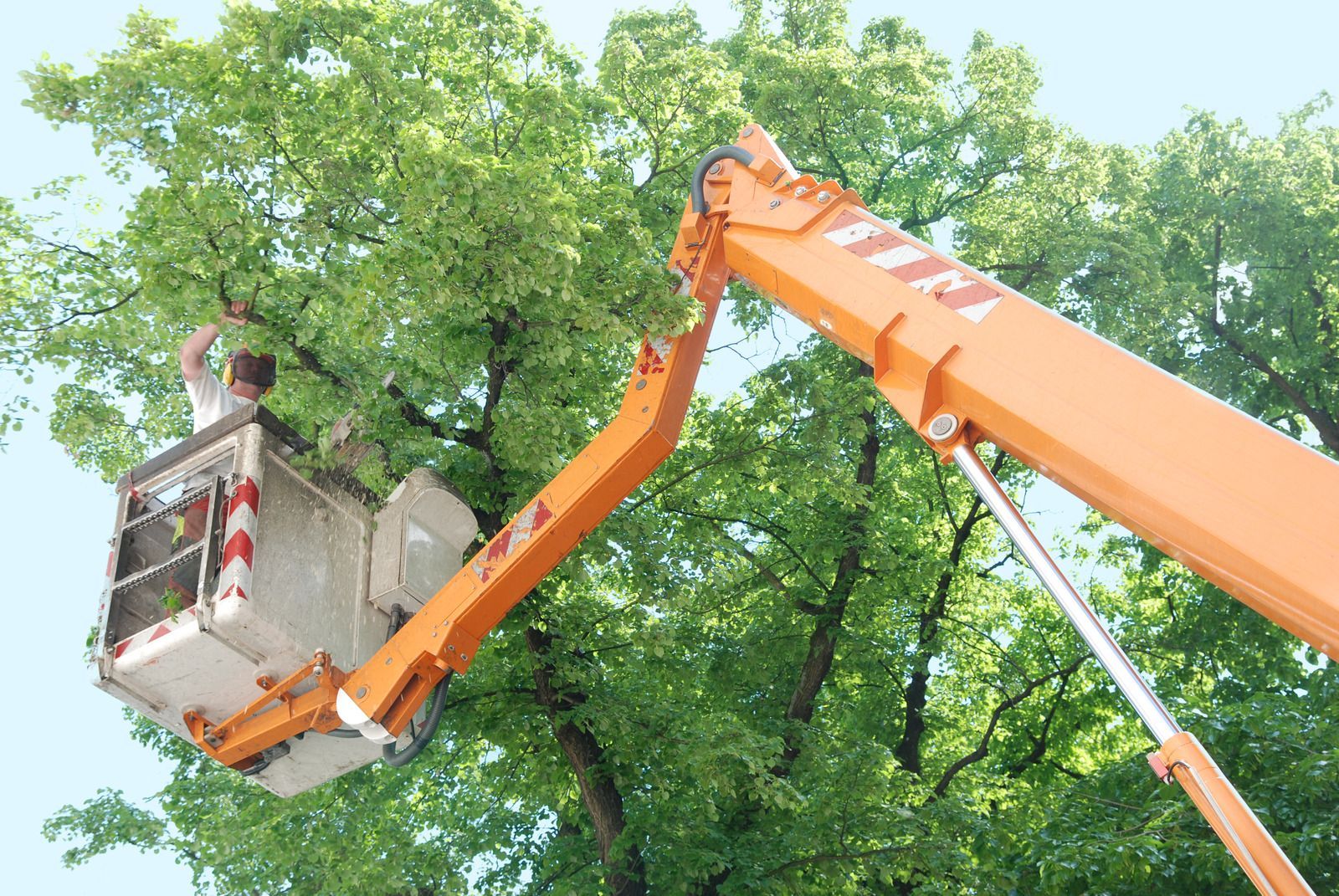
Because dead wood is unpredictable and can shear without warning, crews rely on rigging and roped lowering systems to bring sections down in a controlled sequence instead of letting gravity make the call. When a dead tree stands close to a house, fence, or driveway, it's usually taken down piece by piece from the top rather than felled in one motion, to keep debris and impact away from what's nearby.
Internal decay isn't always visible from the ground, so an experienced crew keeps reassessing the wood's condition at each cut, adjusting technique as they hit softer or more compromised sections. A complete job wraps up with full cleanup — hauling debris, chipping brush, and leaving the site clear. Stump grinding can follow after, if you want the base gone too.
Tip: If you're not sure whether a tree is dead or just slow to leaf out, run the scratch test on two or three spots on live-looking branches — a thin sliver of bark peeled back to reveal green tissue means it's alive, while dry brown wood underneath means that branch, or the whole tree, may already be dead. Do this in spring after neighboring trees of the same species have fully leafed out, so you're comparing against a fair baseline.
Frequently Asked Questions
How long can a dead tree safely stand before it needs to come down?
There is no fixed timeline because decay depends on species, moisture, and how the tree died. Cracks, hollowing, leaning, or falling bark indicate declining structural stability and increasing removal risk.
Can a dead tree be saved instead of removed?
No. Once a tree is dead, nothing reverses tissue death, including pruning, fertilizing, or watering. The remaining decision is when and how to remove it safely before decay makes removal more hazardous.
Is it more dangerous to remove a dead tree than a living one?
Sometimes. Dead wood can behave unpredictably because internal decay may remain hidden. Branches or trunk sections can shear unexpectedly, making professional rigging and sectional removal especially important during dead tree removal.
What if the dead tree isn't near my house — does it still need to come down?
A dead tree in an open area has lower immediate risk, but wind or ice can still send branches toward fences, driveways, neighboring properties, or walking paths, creating hazards that deserve assessment.
Do dead trees attract pests that could spread to my other trees?
Yes. Dead and decaying wood can attract boring insects, carpenter ants, and termites. Nearby healthy trees or structures may become vulnerable, so removing the dead tree promptly can help limit pest activity.
Will removing a dead tree also take care of the stump?
Not automatically. Tree removal and stump grinding are typically separate services. After the tree is removed, the stump can be ground immediately or later, depending on whether you plan to replant.
Why the Calendar Matters More Than the Tree
A dead tree does not hold still while you decide what to do with it. Every week the wood dries a little further, the roots loosen a little more, and the failure point shifts somewhere you cannot see from the ground. That is why the real question is rarely whether the tree comes down. It is whether it comes down on a schedule you set, or on one a storm sets for you.
Homeowners across Springfield, MO tend to notice the problem in spring, when a bare canopy stands out against everything leafing out around it. That is the right moment to have someone look closely at the trunk, the root base, and whatever sits inside the fall zone. Oasis Tree Care, LLC
has spent 20
years reading those signs on local properties, and an early look is often what keeps a
difficult removal
in the routine column.